
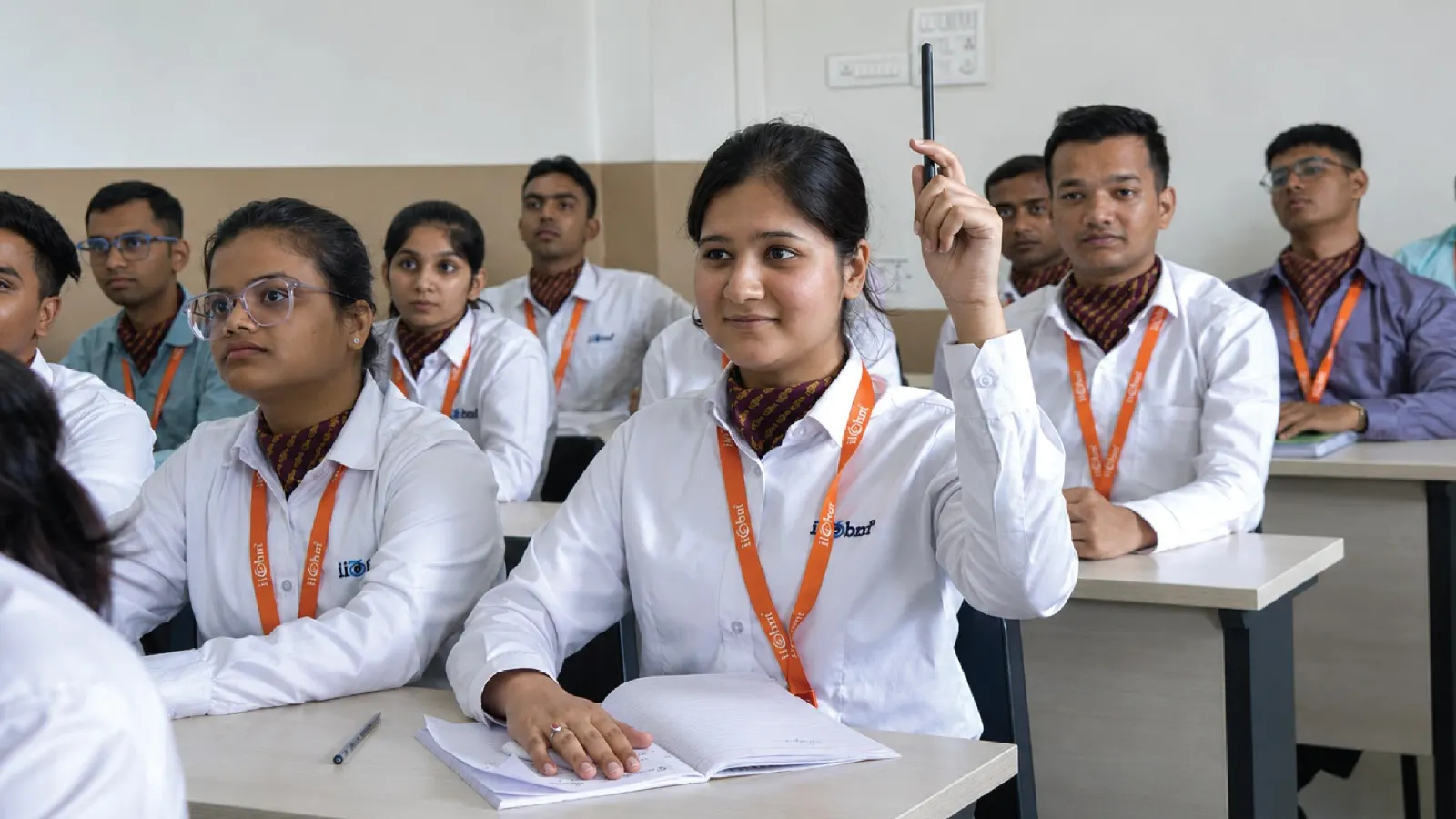
Walk into any PGDM classroom on day one and you will notice something the brochure does not quite capture: the person next to you might be an ex-Army officer, the one behind you ran a family textile business, and the one across the aisle just finished four years writing Python at a fintech startup. None of them read the same case study the way you do. That’s the actual curriculum – the cohort diversity in business school.
Business schools sell you faculty, infrastructure, and placement stats. What they undersell is this: your classmates are doing half the teaching, whether the timetable admits it or not.
The textbook only gets you halfway
A professor can walk you through a Harvard case study on inventory mismanagement. But it is the classmate who spent two years on a shop floor who tells you why the textbook version leaves out the part where the warehouse manager just doesn’t trust the new software. An engineer in your group will instinctively poke holes in a process flow; a CA will spot the tax implication nobody else noticed. You do not get that range from a syllabus – you get it from sitting in a room with people who’ve lived different problems. That’s the beauty of a peer learning MBA or PGDM.
Group work stops being a chore
Ask any PGDM student what they actually remember two years later. It’s the 1 a.m. argument over a case submission, where someone’s stubborn insistence on a different pricing model turned out to be right. Diverse cohorts do not make group projects easier – if anything, they make them harder, because agreement takes longer when everyone’s starting point is different. But that friction is the point. You stop defending your first idea just because it was yours, and you start building arguments that survive contact with people who disagree with you, and that is the plus point of a diverse batch of PGDM students.
You practice working across difference before it costs you anything
Every company you will eventually join is a mix of regions, backgrounds, and working styles – a manager from Chennai, a vendor from Ludhiana, a client team based out of Singapore. B-school is the cheapest place to get this wrong. Misreading a teammate’s silence as disagreement, or their directness as rudeness, costs you a bad grade here. Do it with a client three years into your career, and it costs you the account. The classroom is low-stakes practice for something that will never be low-stakes again.
The network outlasts the degree
Two years from now, the classmate who explained discounted cash flow to you at 11 p.m. before an exam might be the person who refers you to your next job – or the founder you decide to bet your career on. PGDM cohorts don’t stay confined to the classroom; they become the informal network that keeps opening doors for a decade or more. That’s not a soft benefit. That is often the actual ROI of the degree.
So, is a diverse cohort “nice to have”?
Not really. It’s closer to a forcing function. It is the difference between learning management theory and learning how management actually happens – messily, across disagreement, with people who don’t think like you, which is the point of a multicultural classroom in management.
At IIEBM, the best PGDM college in Maharashtra, that’s not an accident of admissions. It’s built in – a cohort deliberately pulled from different industries, academic backgrounds, and parts of the country, sitting together through case studies, live projects, and the kind of late-night group work that teaches you more than any lecture will. You do not just study business here. You argue about it, with people who see it differently than you do – which, it turns out, is the whole point.